Understanding Gaming the System through Analyzing Self-Regulated Learning
in Think-Aloud Protocols.
Jiayi Zhang, Conrad Borchers, Canwen Wang, Vishal Kumar, Leah Teffera, Bruce M. McLaren and Ryan S. Baker.
last updated-Nov.2025
last updated-Nov.2025
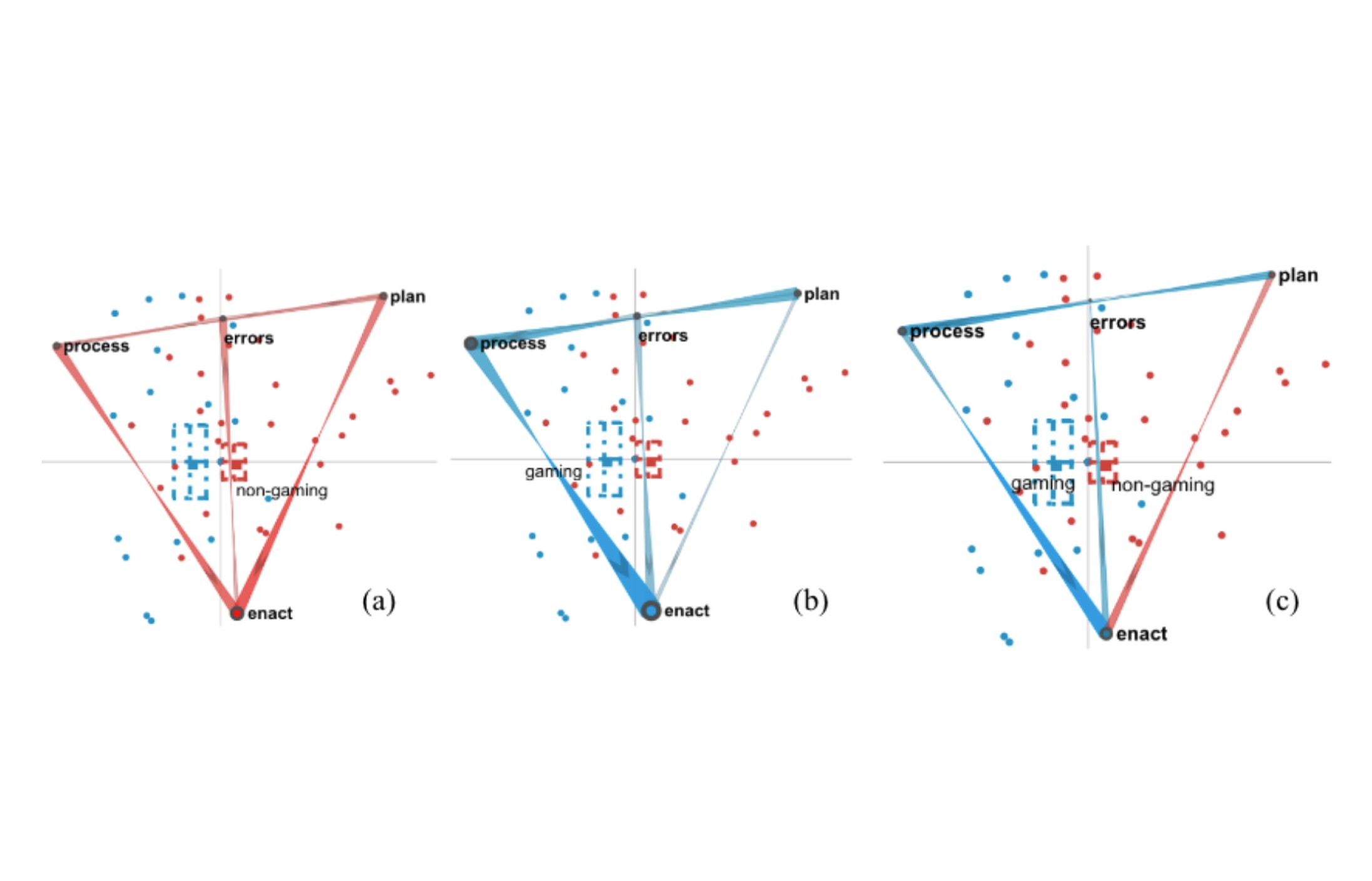
In digital learning systems, gaming the system refers to occasions when students attempt to succeed in an educational task by systematically taking advantage of system features rather than engaging meaningfully with the content. Often construed as a form of behavioral disengagement, gaming the system is shown to be negatively associated with short- and long-term learning outcomes. However, little research has explored this phenomenon beyond its behavioral representation, leaving questions, such as whether students are also cognitively disengaged, or whether they engage in different SRL strategies when gaming the system, largely unanswered. This study employs a mixedmethods approach to examine students’ cognitive engagement and SRL processes during time periods when students were gaming versus not gaming the system, based on utterance length and SRL codes inferred from think-aloud protocols. We found that gaming does not simply reflect a lack of cognitive effort; instead, students often produced longer utterances during periods of gaming, potentially reflecting verbalized frustration or the processing of system feedback. Additionally, students were more likely to engage in processing information and realizing errors, but less likely to engage in planning, when gaming. Through ordered network analysis (ONA), we show that students were more likely to exhibit reactive behaviors rather than proactive learning strategies. Together, these findings support the interpretation that gaming may represent a maladaptive form of SRL—one in which students rely on system feedback, avoid planning, and engage in reactive rather than proactive processes.
The International Conference on Learning Analytics & Knowledge (LAK’26)