Emotive Pathway
2023
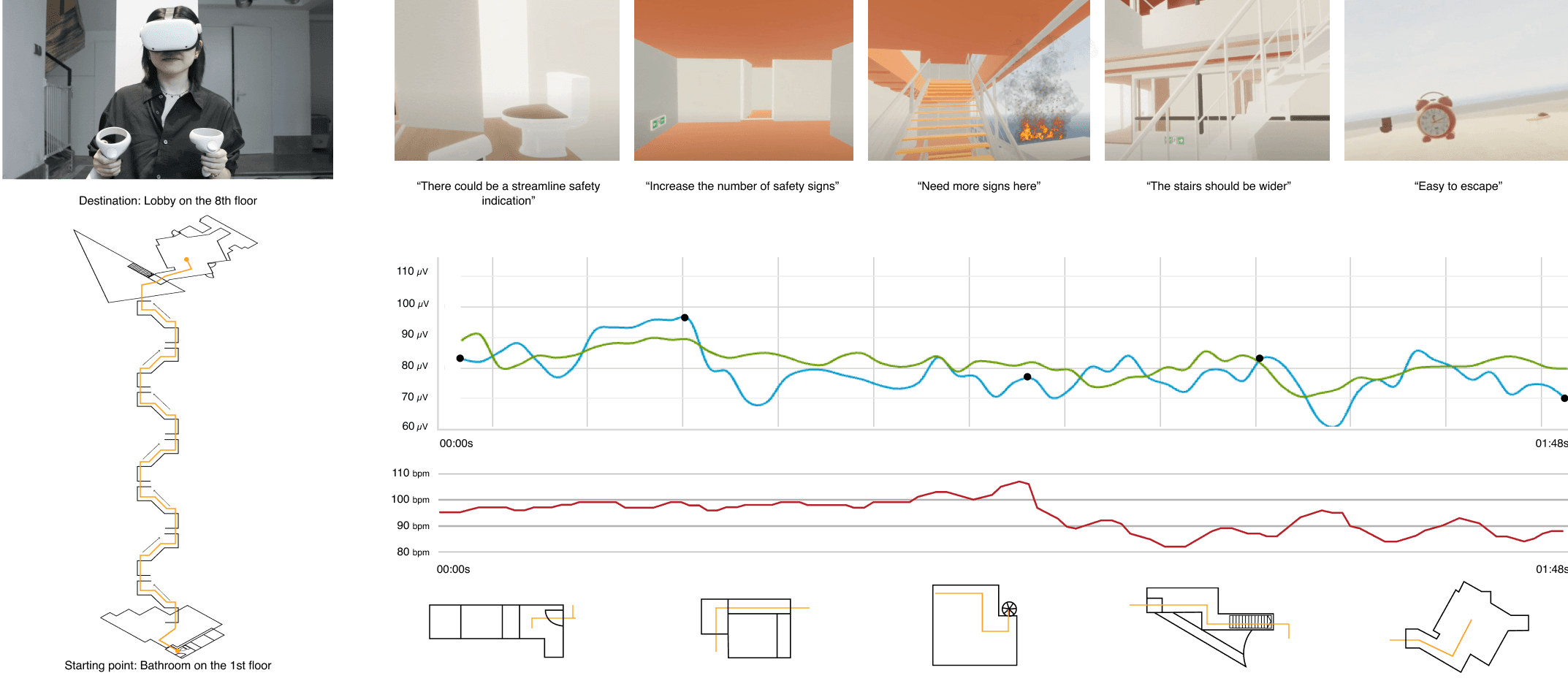
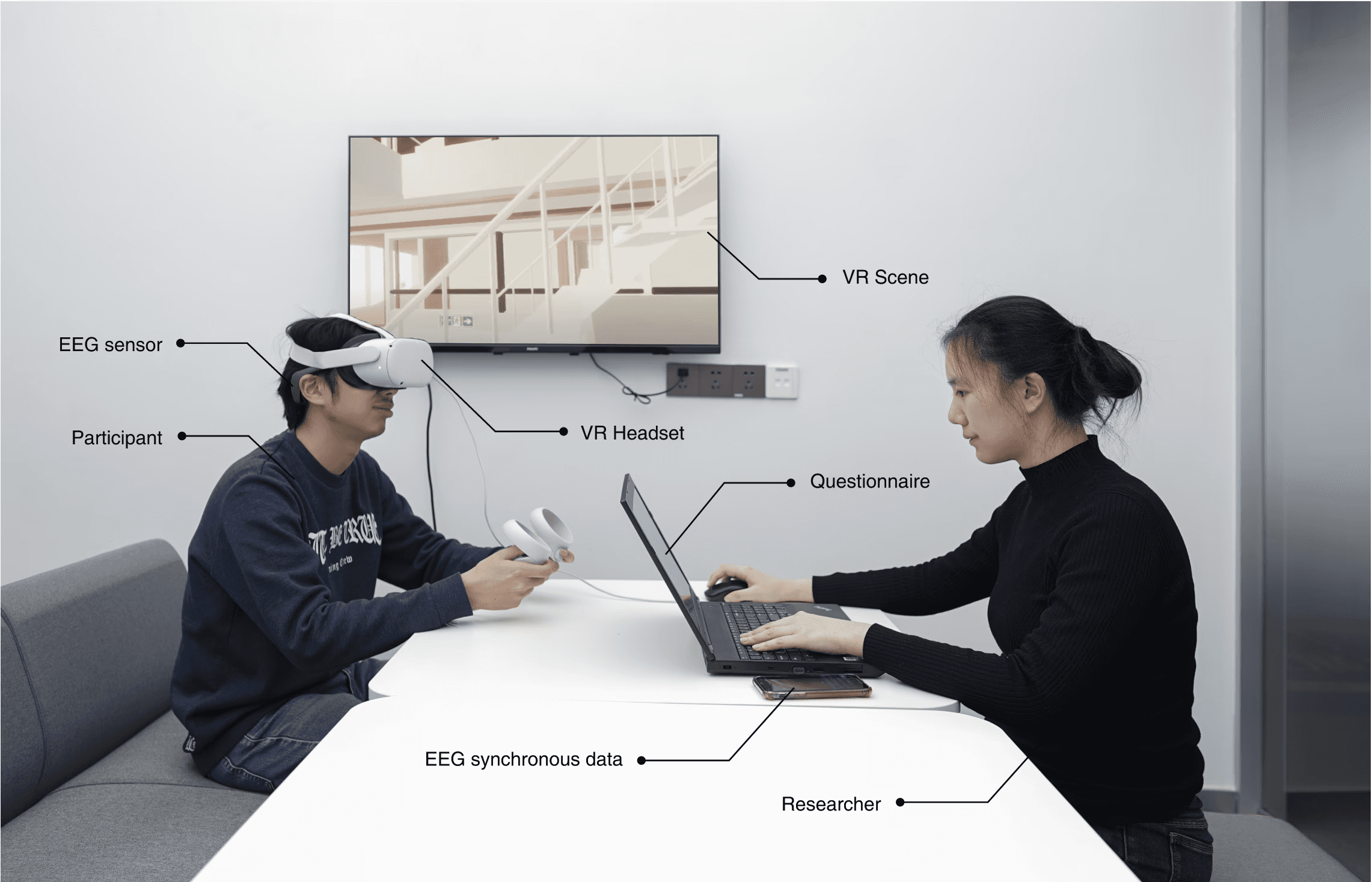
Emergency evacuation is a critical aspect of disaster management, especially within complex architectural structures. Research indicates that individuals' emotional states significantly impact their decision-making and evacuation efficiency during emergencies. To examine the impact of safety signage and the location of escape starting points on evacuees' emotions and decision-making, this study utilized two blocks of The Interlace as case studies to create a virtual reality (VR) escape scenario.Participants underwent escape trials in a VR environment, during which electroencephalogram (EEG) and heart rate data were collected. Additionally, a questionnaire was administered together information on their emotions and escape decision-making. The findings offer design implications to enhance the evacuation experience, ensuring future engineering designs are more considerately aligned with the human-centered factors of emergency situations.
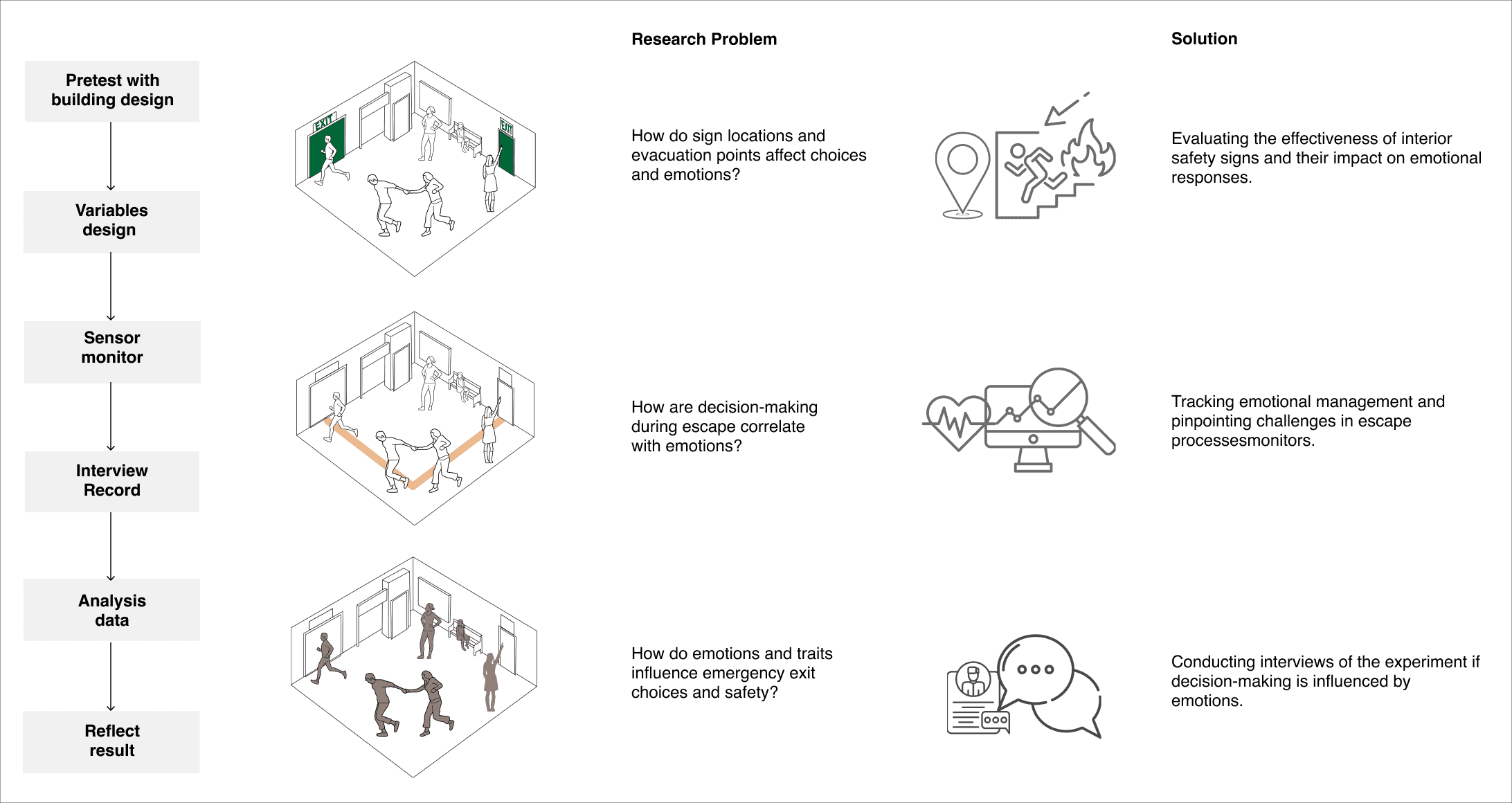
Experiment Design
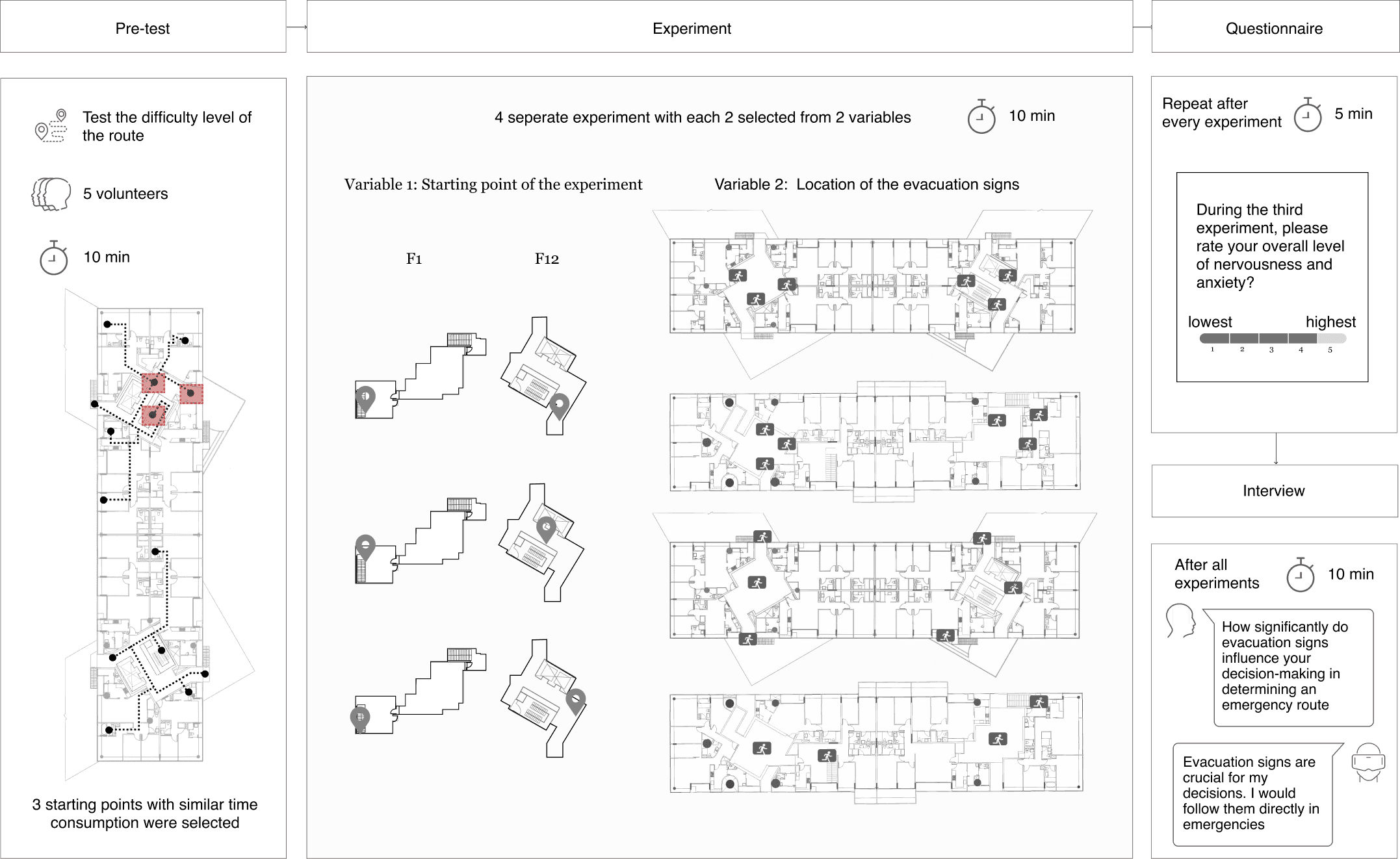
The experiment is built based on Singapore’s complex luxury apartment, Interlace, to address challenges in evacuation such as disorientation and the visibility of exit signs during emergencies. We proposed escape routes connecting two buildings of the Interlace.

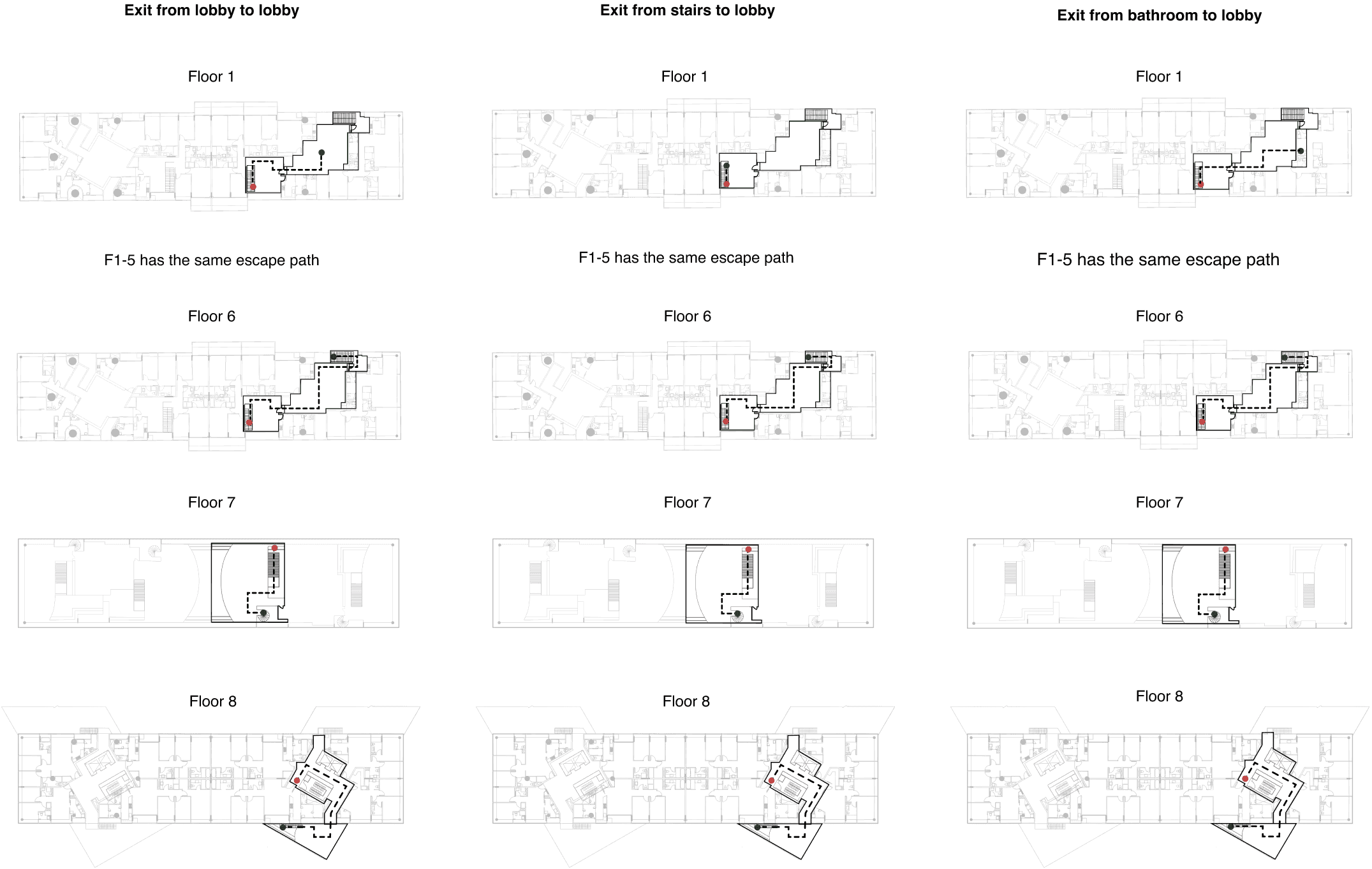
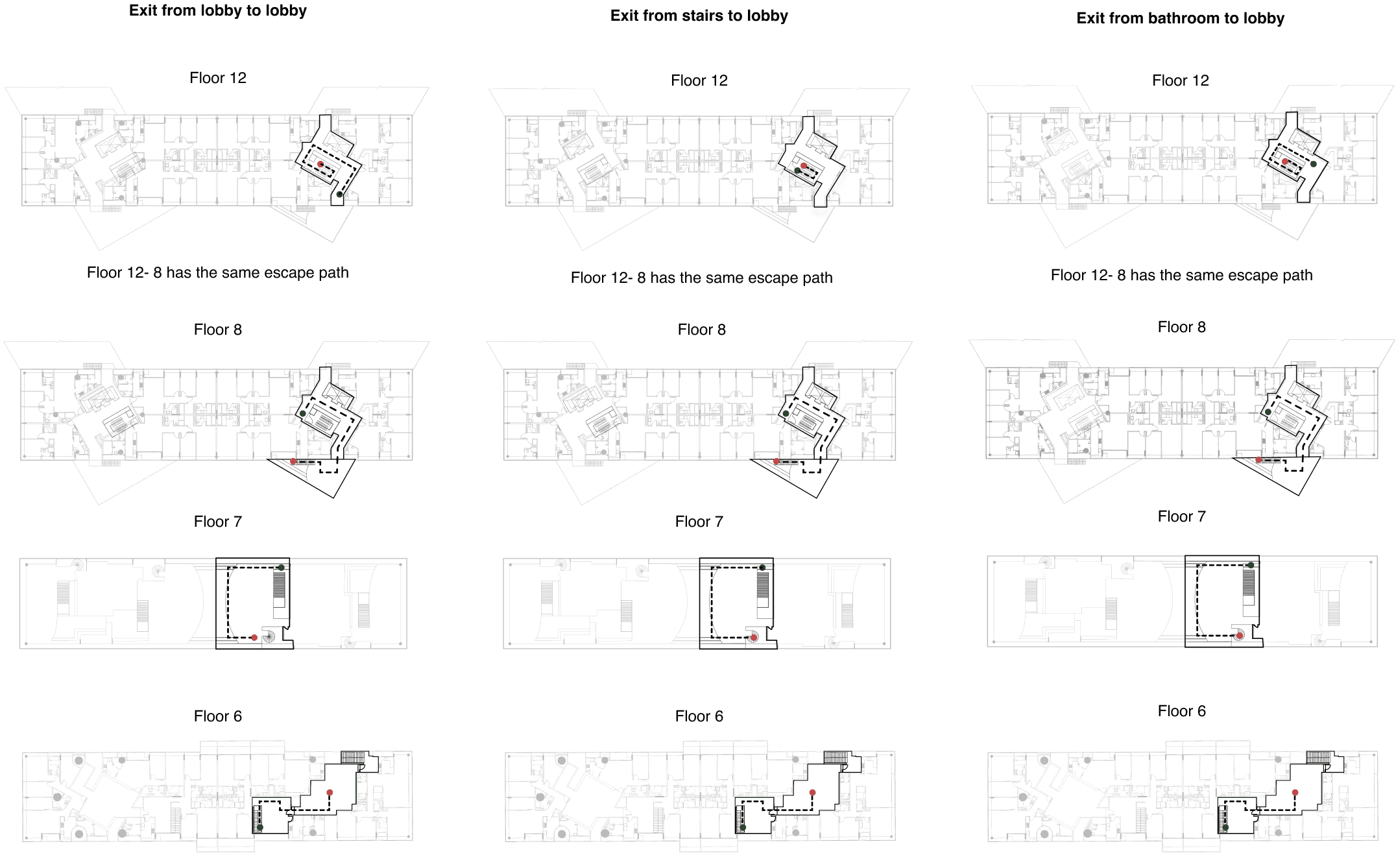
Research Methodology
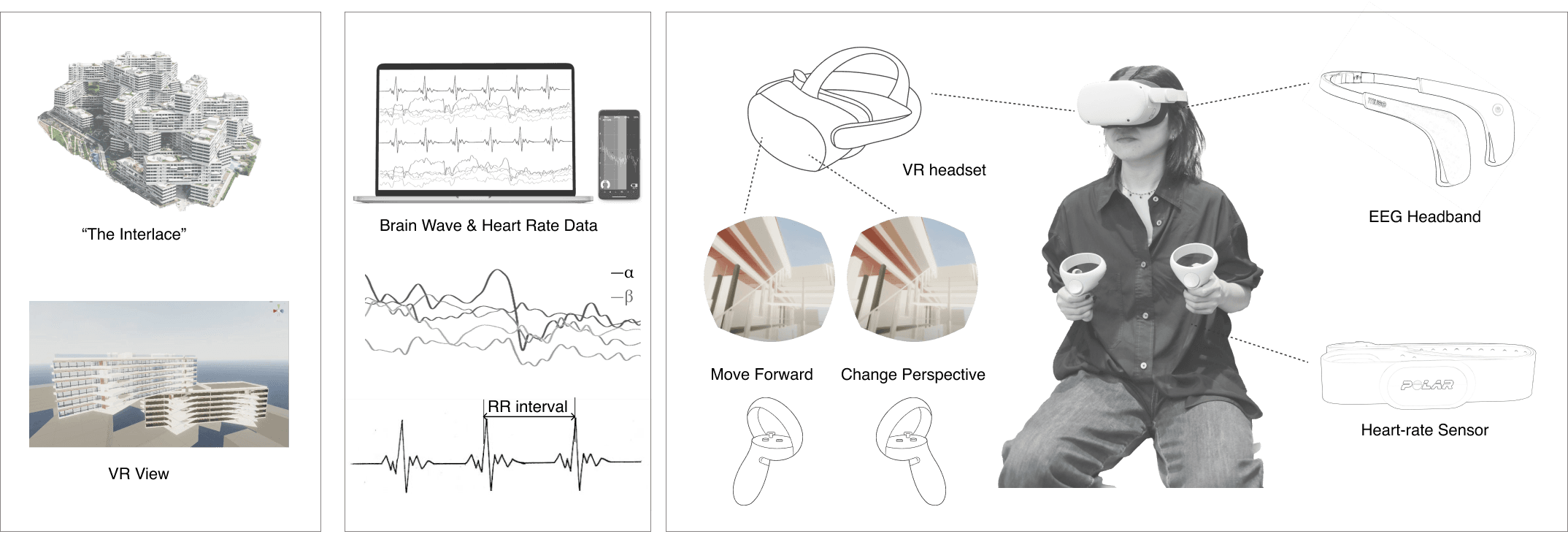
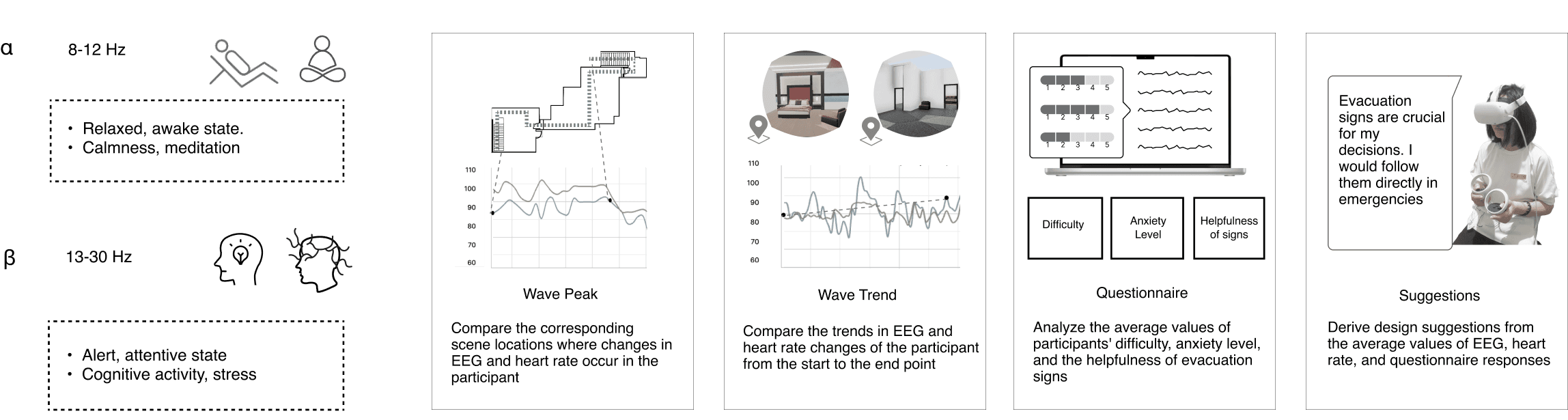
Analysis Methods
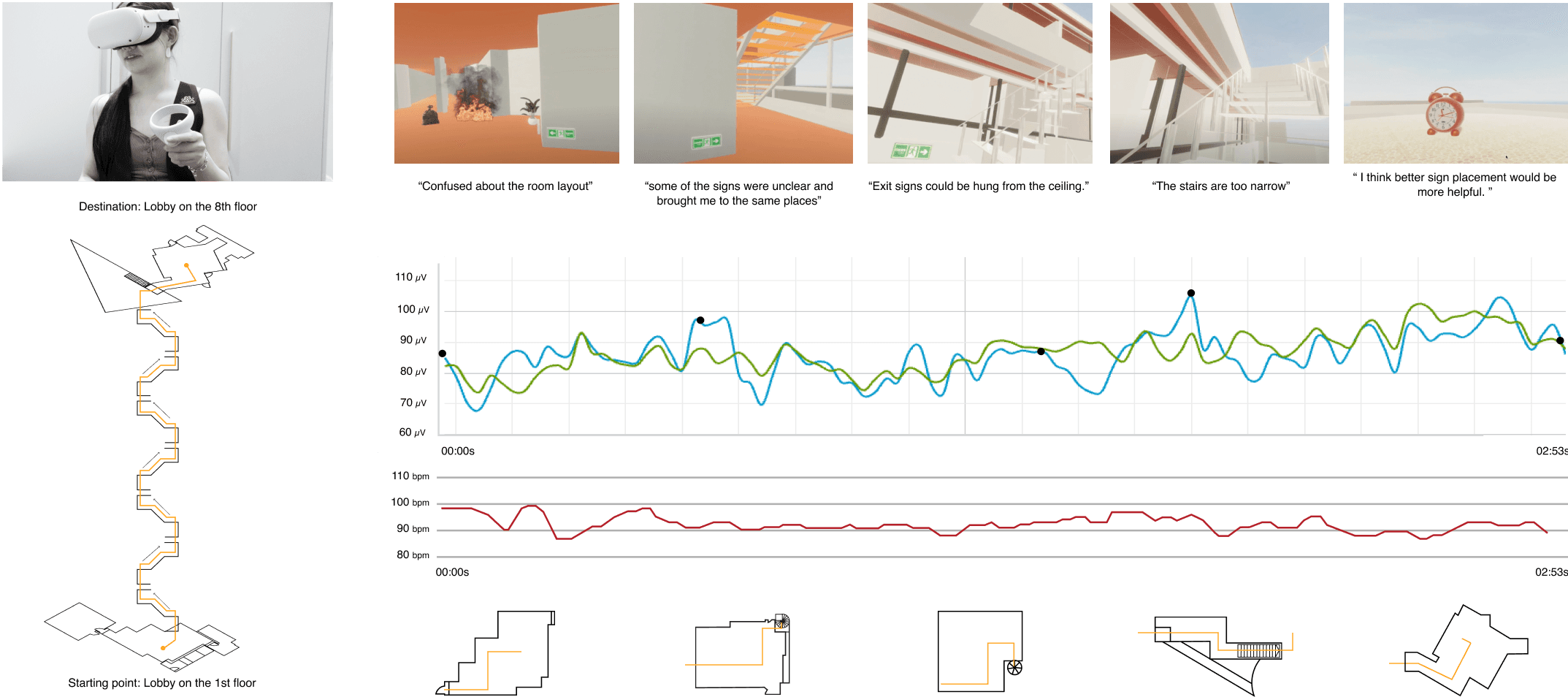
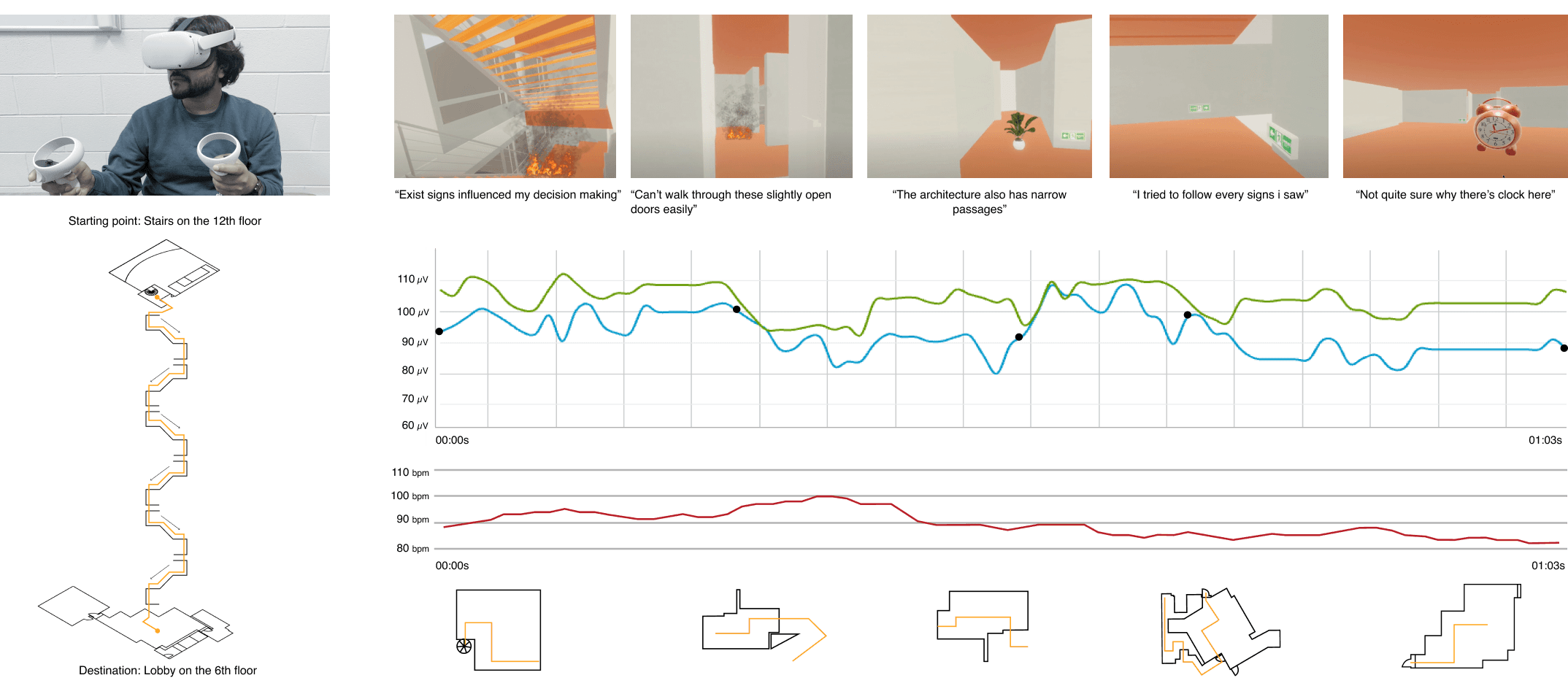
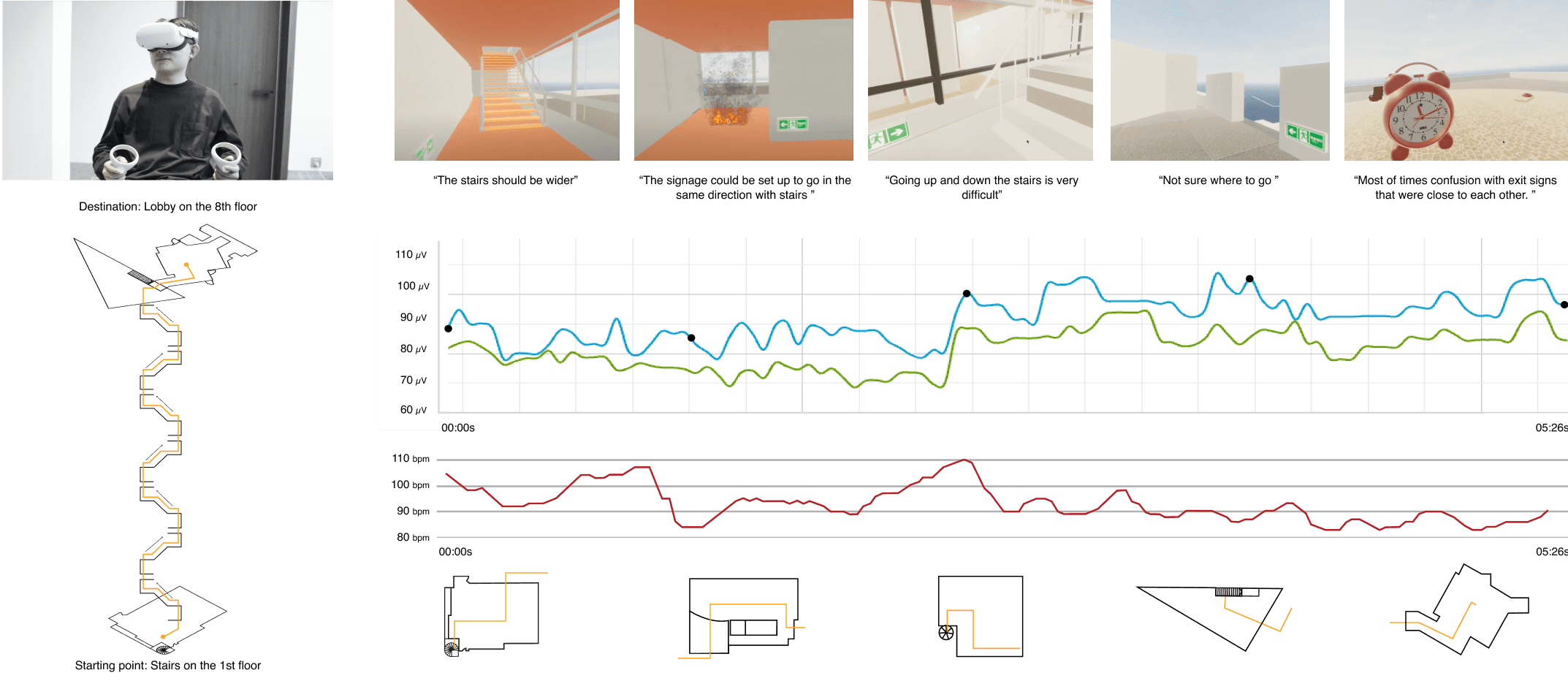
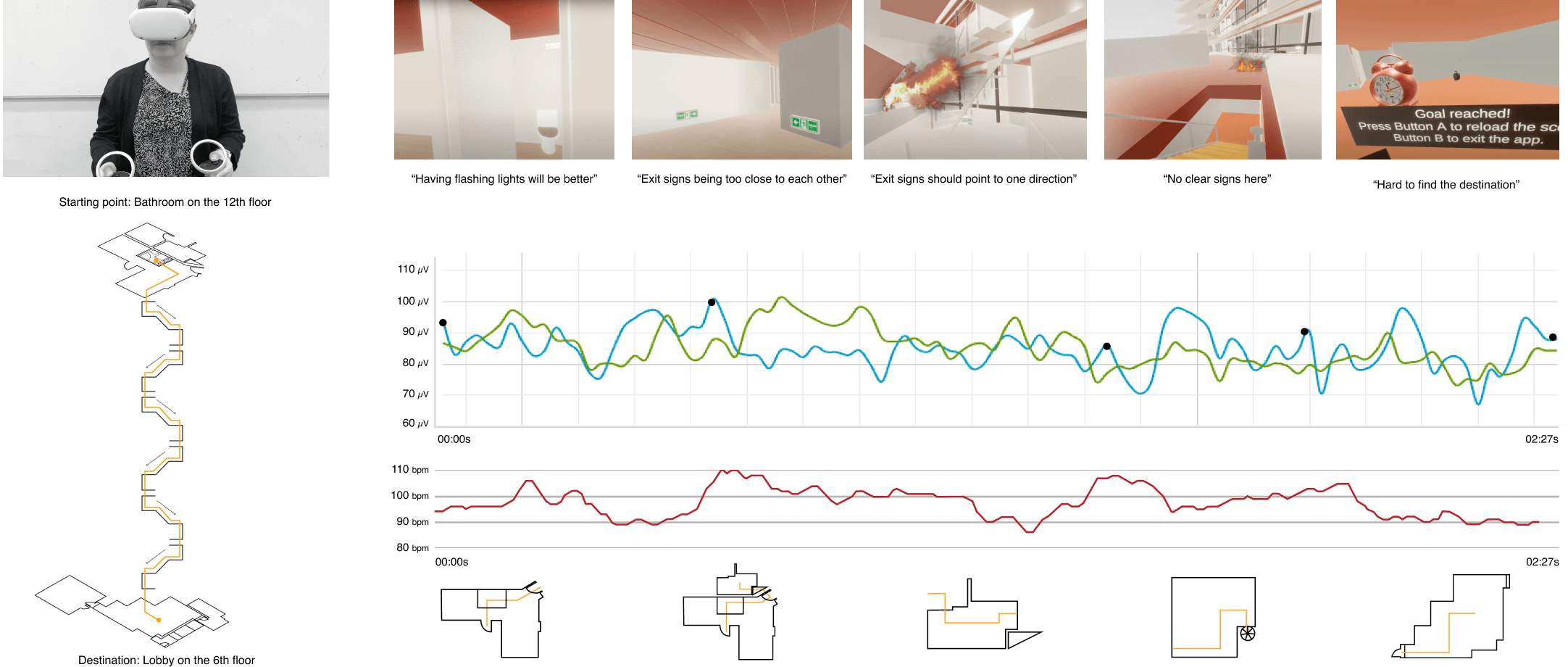
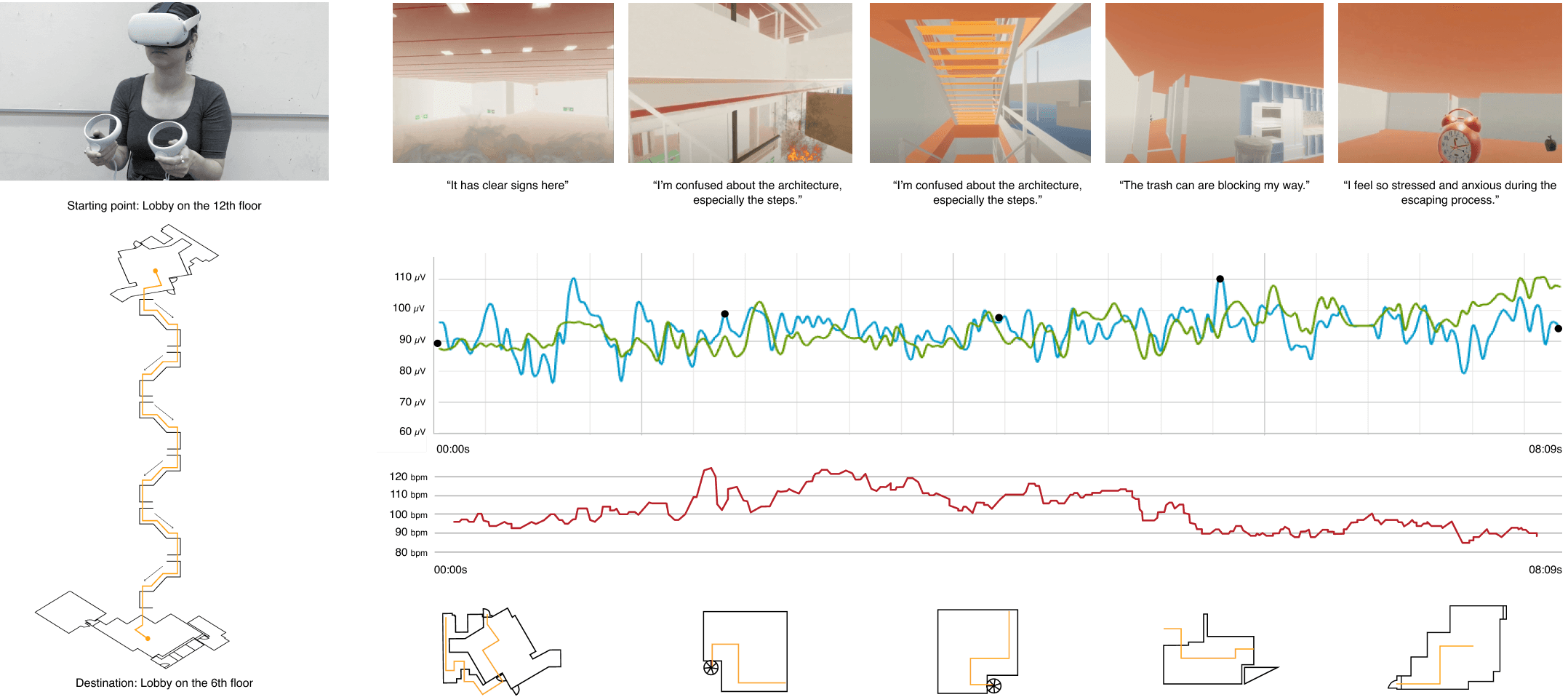
VR & EEG Test Result
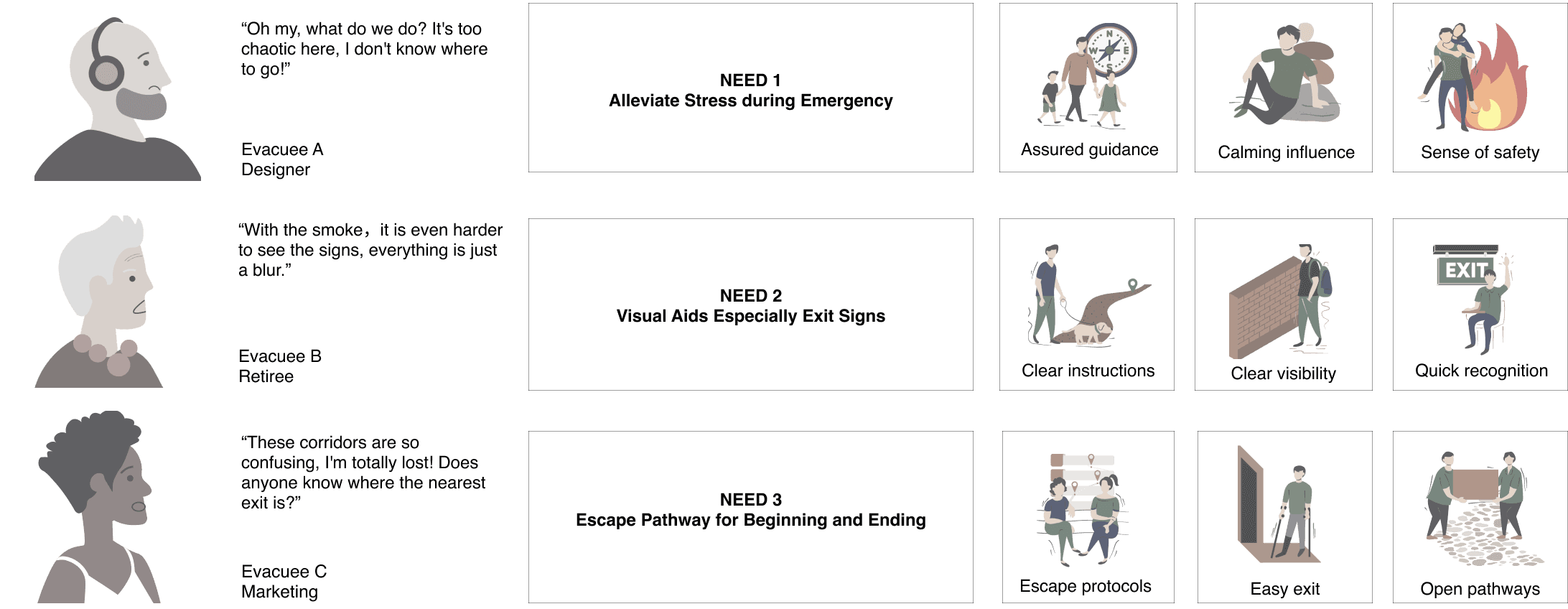
The feedback from participants highlights the need for a clearer and more consistent signage system, improved architectural design to simplify navigation in areas like narrow hallways and complex staircases, and the addition of sensory cues such as lights and sounds, along with strategically placed signs, especially in confusing areas or near obstacles, for more effective emergency evacuation.


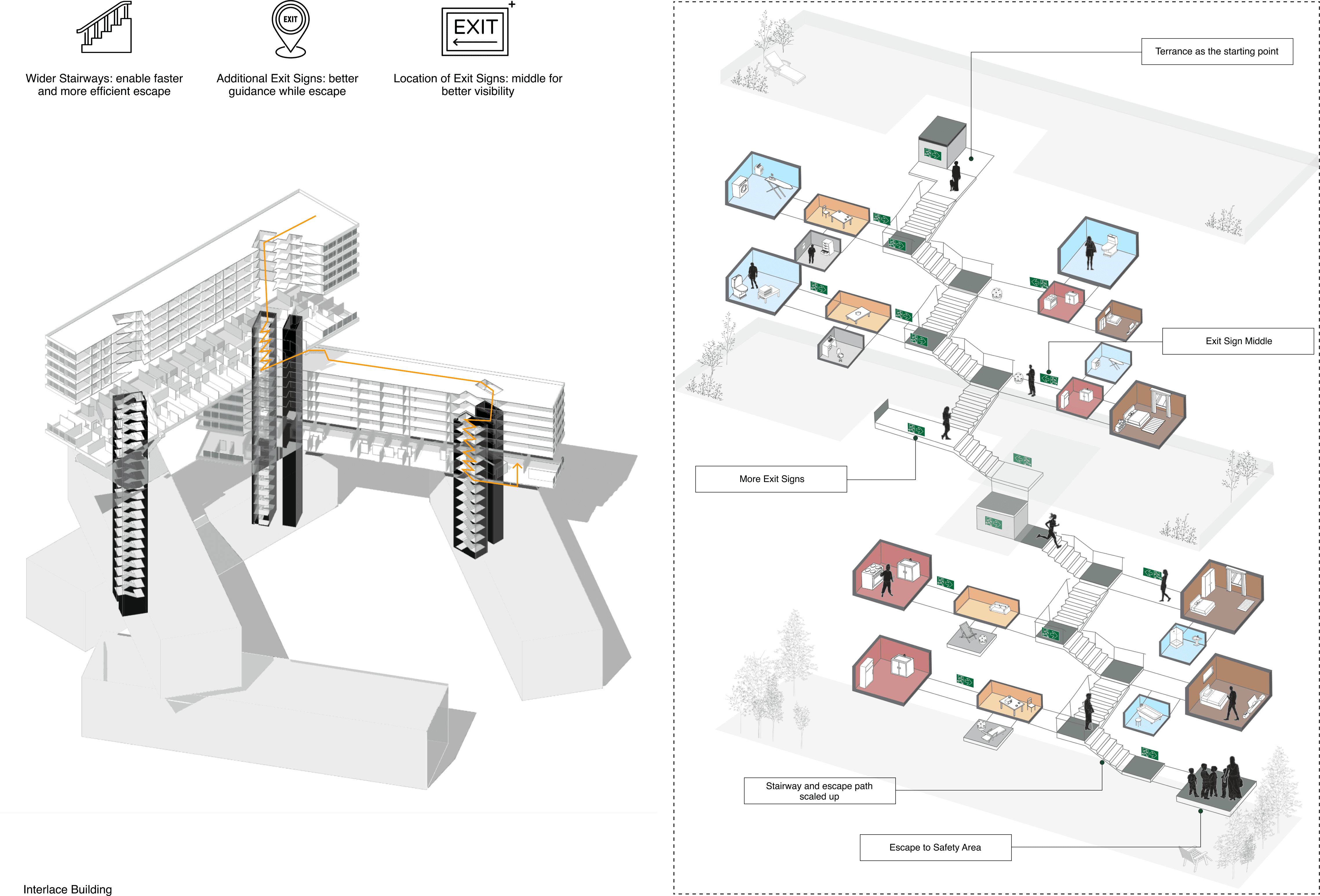
Design Implications - Emergency Planning Revision
last updated-Nov.2025
last updated-Nov.2025
Instructor: Han Tu
Group Members: Yaluo Wang/Yiwei Wang
My Role: Data Anaysis/User Test/Concept Development